

Homemade Pastrami or Corned Beef Recipe
Why buy store-bought pastrami loaded with preservatives and ingredients you can't even pronounce when you can make your own at home?
This recipe is surprisingly easy as long as you follow the instructions carefully. You can make it with either beef brisket or a bottom round roast, depending on the texture you're after.
Brisket produces the classic tender, pull-apart texture that melts in your mouth.
Bottom round roast is leaner and slices beautifully, giving you that traditional deli-style pastrami.
This recipe calls for Prague Powder #1, also known as Insta Cure #1 or Pink Curing Salt #1. Because the meat is smoked at a low temperature, I strongly recommend using a curing salt. In addition to helping protect the meat during the smoking process, it also gives pastrami its signature deep rosy-red color and distinctive cured flavor.
Don't have a smoker, no problem. Use your gas grill with a smoker box. Search the internet for a smoker box for grill.
Want Corned Beef Instead?
You're already halfway there! Corned beef is made using the same curing process—simply skip the smoking step. Instead, simmer the cured meat until fork tender.
For the best corned beef, I recommend using brisket, as its marbling produces a rich, juicy result that's perfect for slicing or serving with cabbage and potatoes.
Whether you choose homemade pastrami or classic corned beef, you'll end up with a flavorful, preservative-free product that's well worth the wait.
Ingredients
Brine
1 gallon water
300 g kosher salt
Pink Curing Salt #1 (Prague Powder #1 or Insta Cure #1) – ¼ teaspoon per pound of meat (For a 5-pound roast, use 1¼ teaspoons.)
3 tbsp pickling spice
½ cup light or dark brown sugar
2 garlic cloves, smashed or cut into large pieces
Meat
5 lb beef brisket or bottom round roast
¼ cup beef stock (only if making pastrami)
Large food-safe plastic container with lid big enough to hold brine and meat.
Important: The amount of Pink Curing Salt #1 must be based on the weight of the meat, not the amount of brine. Always use ¼ teaspoon of curing salt per pound of meat. For example:
3 lb roast = ¾ tsp
4 lb roast = 1 tsp
5 lb roast = 1¼ tsp
6 lb roast = 1½ tsp
Do not exceed the recommended amount. Accurate measurement is essential for both food safety and the proper curing of the meat.
Prepare the Brine
In a large stockpot, combine the water, kosher salt, brown sugar, pickling spice, and garlic.
Stir frequently and bring the mixture to a boil, just until the salt and sugar have completely dissolved.
Remove the pot from the heat and allow the brine to cool completely. For food safety, refrigerate the brine until it is 40°F (4°C) or colder before adding the meat.
Prepare the Meat
Using a skewer, meat fork, or the tip of a sharp knife, poke holes over all sides of the brisket or bottom round roast. This helps the brine penetrate the meat more evenly during the curing process.
Combine the Brine
Pour the completely chilled brine into a large food-safe plastic or non-reactive container.
Add the measured Pink Curing Salt #1 and stir until it has completely dissolved.
Important: Never add Pink Curing Salt #1 to hot or warm brine. Always allow the brine to cool completely before adding the curing salt to ensure proper curing and food safety.
Brine the Meat
Place the brisket or bottom round roast into the chilled brine, making sure it is completely submerged.
Place a small plate or other food-safe weight on top of the meat to keep it fully submerged throughout the curing process.
Cover the container and refrigerate.
Curing Time
Up to 5 pounds: Brine for 5–7 days.
Over 5 pounds: Brine for 7–10 days, depending on the thickness of the meat.
Every 2 days, turn the meat over in the brine to promote even curing.
Tip: Keep the brine refrigerated at 40°F (4°C) or below for the entire curing process. Never allow the meat to sit at room temperature while curing.
If you are making corned beef your done! Rinse the meat thoroughly and simmer until tender.
For Pastrami:
Prepare the Meat
Remove the meat from the brine and rinse it under cold running water.
Place the meat in a large container or bowl filled with cold water and soak for 4–6 hours, changing the water every 1–2 hours.
Important: This step removes excess salt from the cured meat. Skipping it will result in an overly salty pastrami.
Remove the meat from the water and pat it completely dry with paper towels.
Make the Pastrami Rub
Ingredients
2 tbsp whole black peppercorns
2 tbsp whole coriander seeds
1 tsp granulated garlic (or garlic powder)
1 tsp granulated onion (or onion powder)
Yellow mustard
Instructions
Place the black peppercorns and coriander seeds in a spice grinder.
Pulse 5–6 times, leaving the spices coarse rather than finely ground.
Transfer the ground spices to a small bowl and stir in the granulated garlic and granulated onion.
Season the Meat
Lightly coat the entire surface of the meat with yellow mustard. The mustard acts as a binder and won't leave a noticeable flavor after smoking.
Generously apply the spice mixture, pressing it firmly onto all sides of the meat.
Place the seasoned meat on a wire rack set over a sheet pan and refrigerate uncovered for at least 8 hours, preferably overnight. This resting period allows the seasoning to adhere to the meat and helps develop a better crust, or "bark," during smoking.
Smoking the Pastrami
Remove the seasoned meat from the refrigerator and let it sit at room temperature for 1 hour.
Preheat your smoker to 225–250°F (107–121°C). I recommend using hickory or oak wood.
Place the meat directly on the smoker grate and insert a temperature probe into the thickest part of the meat.
Smoke until the internal temperature reaches 160–165°F, approximately 4 hours, depending on the size and thickness of the cut.
Remove the meat from the smoker and wrap it tightly in a double layer of heavy-duty aluminum foil. Before sealing the foil, add ¼ cup of beef stock to help keep the meat moist during the final cook.
Return the wrapped meat to the smoker, or place it in a 250°F oven, and continue cooking until the internal temperature reaches 200–205°F. Since the meat has already absorbed its smoke flavor, using the oven for this step works just as well. Don't worry about the "stall." During the cook, the internal temperature may stop rising or even fluctuate slightly for an extended period of time. This is known as the stall and is a completely normal part of smoking large cuts of meat. It occurs as moisture evaporates from the surface of the meat, naturally cooling it—much like perspiration cools your skin. Be patient and resist the urge to increase the temperature. Once the stall passes, the internal temperature will begin rising again until the pastrami reaches its final target temperature.
Remove the pastrami from the heat and let it rest, still wrapped, for 45 minutes. This allows the juices to redistribute throughout the meat, resulting in a more tender and flavorful finished product.
Slice against the grain into thin slices and serve warm.
Serving Suggestions
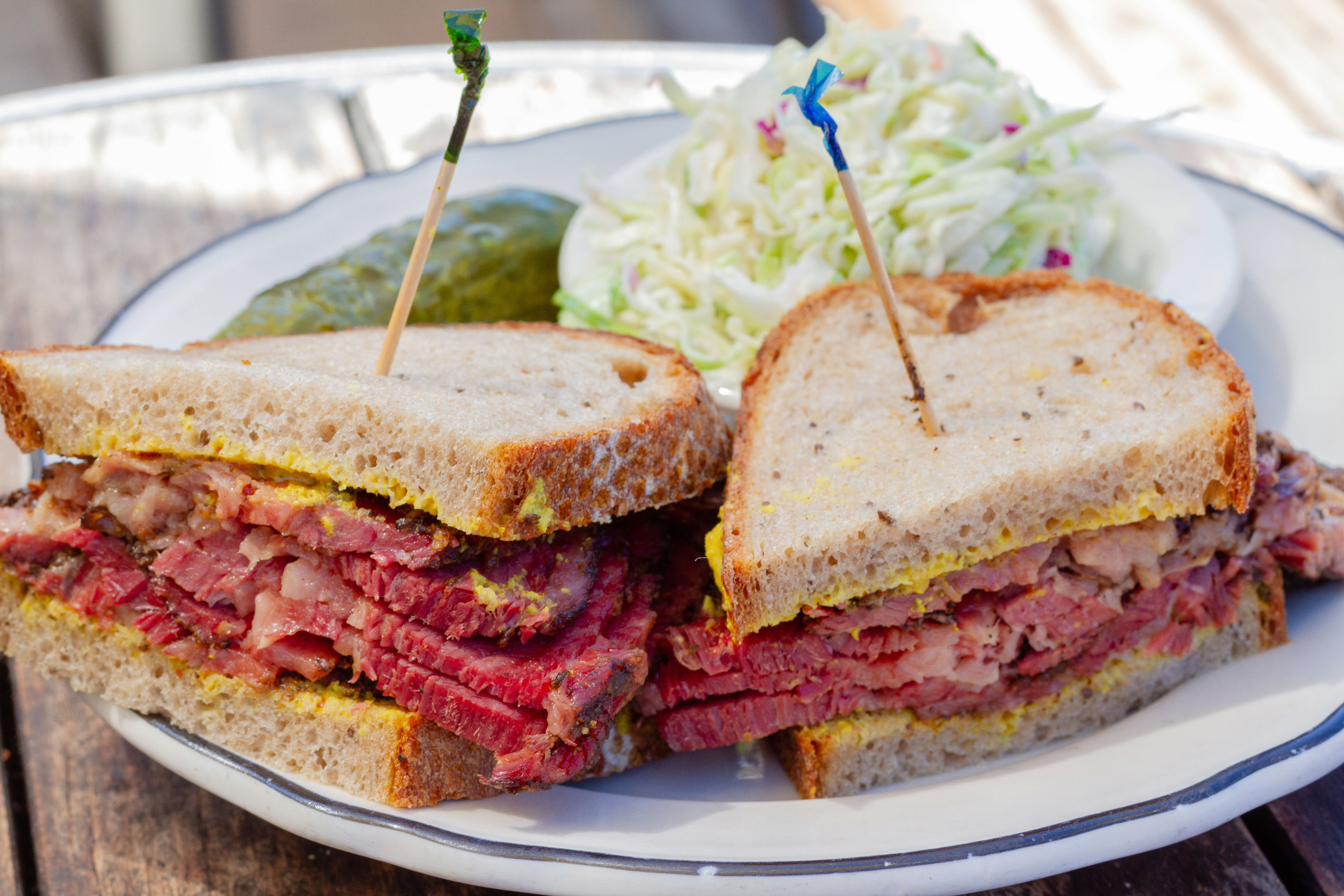
Pile it high on fresh rye bread with Swiss cheese, spicy brown mustard, and a crisp dill pickle for a classic deli-style sandwich. Homemade pastrami also makes an outstanding addition to Reuben sandwiches, breakfast hash, omelets, or charcuterie boards.
Tip: For ultra-thin deli-style slices, chill the cooked pastrami overnight before slicing. Warm the slices gently by steaming them just before serving for authentic delicatessen flavor and texture.





Would you like to leave a comment? Click Here
Follow me on Instagram, Facebook and X
Get in Touch!
© 2026 John's Original Recipes. All rights reserved.
Don’t want to email? No problem! Click here to submit a Contact Us form—we’d love to hear from you! 😊📩

